Twinrova
Surrealist thresholds & labyrinth cheese in Mina the Hollower.
Zelda is a palimpsest. When Capcom’s subsidiary studio Flagship started development on Oracle of Seasons in 1999, it was conceived as a handheld remake of the original NES/Famicom Legend of Zelda (1986), a game Nintendo would later themselves revisit to prototype the emergent physics & chemistry systems for Breath of the Wild (2017). The ‘99 remake project was eventually spun out into a new trilogy, which Flagship conceptualized as playable in any order, with player choices in the first and second games changing the structure of the second and third. One of the entries was canceled, in part due to the ambition of releasing three games in two years, in part due to hardware, as the factorial of six possible trilogy permutations proved irresolvably complex within the constraints of the Game Boy Color’s rudimentary password system. The two Oracle games we ended up with are a curious compromise between a trilogy that doesn’t exist and an archetypical relic from 1986, which, in retrospect, seems to have established an interactive template that a subsequent sixteen mainline installments would each cautiously amend but refuse to obfuscate entirely. Exploring an overworld and the dungeons embedded within it while earning utility items which dynamically solve problems of combat but also navigation—here is a defiantly sturdy core experience, which remained even as the series (and its hardware) became exponentially more complex, technologically and creatively, as visual fidelity increased exponentially, including a medium-defining leap to three dimensions in 1998.
Such taxonomy is a troubled endeavor. Take the genre term “action-adventure,” which has fallen out of vogue, likely because it never referred to a consistent set of mechanics in the first place—until somewhat recently, journalists and players used it most liberally to describe the Zelda games. Perhaps an earlier era’s major studio releases were simply more prone to a hybrid set of gameplay verbs and narrative priorities, one that was so varied as to necessitate generality. (Games are like sandwiches or soups, after all: best described by clusters of ingredients.) Or, maybe we’ve just become more comfortable, of late, with applying naming conventions to genres based on the titles which set the precedent: Rogue (1980), Sokoban (1981), Metroid (1986) with a suffix from Castlevania: Symphony of the night (1997), and Demon’s Souls (2009) have, for better and certainly for worse, become synonymous with mechanics-clusters-as-genres, like procedural generation & permadeath, block-pushing, or utility-gated nonlinearity, each of which they popularized if not invented entirely.
“Zelda-likes” are a strange case. Perhaps “action-adventure” remains the better label for for games like Alundra (1997) or Ōkami (2006), which are indeed “like” the Zelda games via their blend of real-time combat, item-based environmental puzzle-solving, and dungeon structures, but remain commendably distinct from Nintendo’s (or Flagship’s) prior executions of those concepts. Shigeru Miyamoto was himself perhaps remiss (I only recently learned) to mention certain reference points for his own 1986 original—not just the countryside of his childhood around Kyoto Prefecture, but, possibly, reasonably, Namco’s Tower of Druaga (1984), a mainstay in Japanese arcades during development. But his impulse is the right one: I’d argue we gain more by treating Ōkami as rather unlike Ocarina, actually. There’s a world in which we talk less about Mario and Metroid, and more about Konami’s Maze of Galious (1987), or Sunsoft’s Gimmick (1992), or Umihara Kuwase (1994), and it’s one that we bring about by focusing not on what games are “like” others, but by what, if anything, they do uniquely. The thing about broader genre labels is that they offer more room for experimentation, aberrance; if design trends follow market trends follow discourse over what does and doesn’t belong, then, in the aggregate, possibly, litigating over what does and doesn’t belong leads to a sinister erasure of novelty. It’s no coincidence that the “Souls-like” field has become invariably populated by cash-grabby studio riffs that fundamentally misunderstand the non-interruptivity, architectural realism, and atmosphere of its “genre” foundation. Only so much can be gained by rote emulation, flattering & otherwise.
Zelda is particularly prone to such pastiche, however. One ambivalent argument for the “-like” affix as a taxonomical mainstay: if Miyamoto & co. were, in making the 2D Zelda template, at least in part inspired by a childhood spent exploring hillsides and forests, then there now exists a bevy of independent designers at least in part inspired by a childhood spent playing 2D Zelda games. Hyper Light Drifter (2016), MINIT (2018), Prodigal (2020), Tunic (2022), Master Key (2024), Pipistrello and the Cursed Yoyo (2025), and Tearscape (2026) are not just evocative of A Link to the Past or Link’s Awakening DX—they are overt homages. Paradoxically, what they do uniquely—what they do at their best—is follow the lineage of 2D Zelda mechanics to places that Nintendo (or Flagship) demonstrated no real interest in pursuing themselves.
Mina the Hollower (2026), in this context, is a paradoxical asteroid from another reality. Unbound by the actual hardware of the Game Boy Color but adherent to many of the 2D design constraints unique to that device which resulted in masterpieces like the Oracle games; deeply reverent of the threshold-crosserly curiosity which makes 2D Zelda games tick, but more dismissive than the cohort of their simplistic combat, largely-observational “puzzles,” and rote, linear progression systems; smart enough to ditch the mapscreen and get away with it; and supported by a litany of optional modifiers, arcadey in-game challenges, and polished replay variants which neither Nintendo nor Fromsoft would ever touch with an 86-foot stick: here is that most special and endangered kind of game, the action-adventure, which takes us to brilliant new places by way of the oldest and sturdiest ideas.
The fundamental unit of the top-down action-adventure is the fixed space of the current screen, the “rooms” which a player moves between by touching a door or boundary at their edges: if platformers and shoot-em-ups are structured by their rather-papyrus-like scrolls, then these games are composed of grids, like graph paper or chessboards. When many of us think of our earliest gaming memories, we think of the sheet of dark squares which appeared when you hit the select button on a Game Boy Color's Zelda game. When Flagship was trying to remake 1986, they ran into a fairly basic problem: the GBC's 160x144 resolution was smaller than the NES’s 256x240, and so the fundamental unit—any one square on the board—had to undergo a compression that changed it so totally it was easier to conceptualize a trilogy of new games for the current system than a proper remake of an older game on a different one.
Mina knows certain restrictions here don’t really matter. ”Rooms” can be quite large, even, and varying their size becomes a primary tool of pacing for the developer, a kind of syntax. What does need to be preserved by way of these now-arbitrary constraints is their basic logic of sequential, fixed confinement: the squares are an invaluable conduit for the player’s imagination. Navigational challenges or aesthetic delights particular to any one square are always contextualized by a more general act of visualizing any adjacent playing space which has not already been visited—not just how to get there, but what it might look like. Consider the surrealist game of cadavre exquis (exquisite corpse), wherein one player draws an image, folds it such that only the very end can be seen, and the next player continues the drawing by an act of spontaneous, curious improvisation. André Breton recalls the game’s genesis:
“When the conversation began to lose its vigor concerning the events of the day and proposals of amusing or scandalous interventions we could make in our lives, we would turn to games. We started with writing games, devised so that the normal elements of conversation were distorted and made as paradoxical as possible. In that way, human communication, twisted from the start, led us as much as possible toward adventure. From that time on, no one was prejudiced against children's games, for we found we felt the same zeal for them as we had felt in childhood, and more. Seeing that games could turn our meetings upside down, we had no trouble agreeing that the Exquisite Corpse method is not significantly different from the methods of ‘good books.’ Nothing was easier than to transpose this method from writing to drawing, using the same folding and hiding system…What excited us about these games is that no single mind could have made what they created, and that they had a great deal of the power of drift, which poetry too often lacks. With the Exquisite Corpse we found a way—finally—to escape our self-criticism and fully release the mind’s metaphorical activity.” (Le surréalisme et la peinture, Gallimard 1965, 288-290, emphasis).
Crossing between the folds of Mina’s rooms works upon the mind in a strikingly similar way. Each square is only a small component of a much larger regional picture, but without a map menu, that picture is never seen in its entirety, so it must be imagined, and also recalled. Constantly. The participant is most sensitive to the unseen side of the fold. In a major sense the game is what’s happening while the player considers what to do next: that’s how actual exploration works, and why adventures are beholden to thresholds, to uncertainty. To wandering in any one direction until there arises a barrier, a locked door metaphorical or not, which prompts improvisational circumnavigation, experiments, befuddlement.
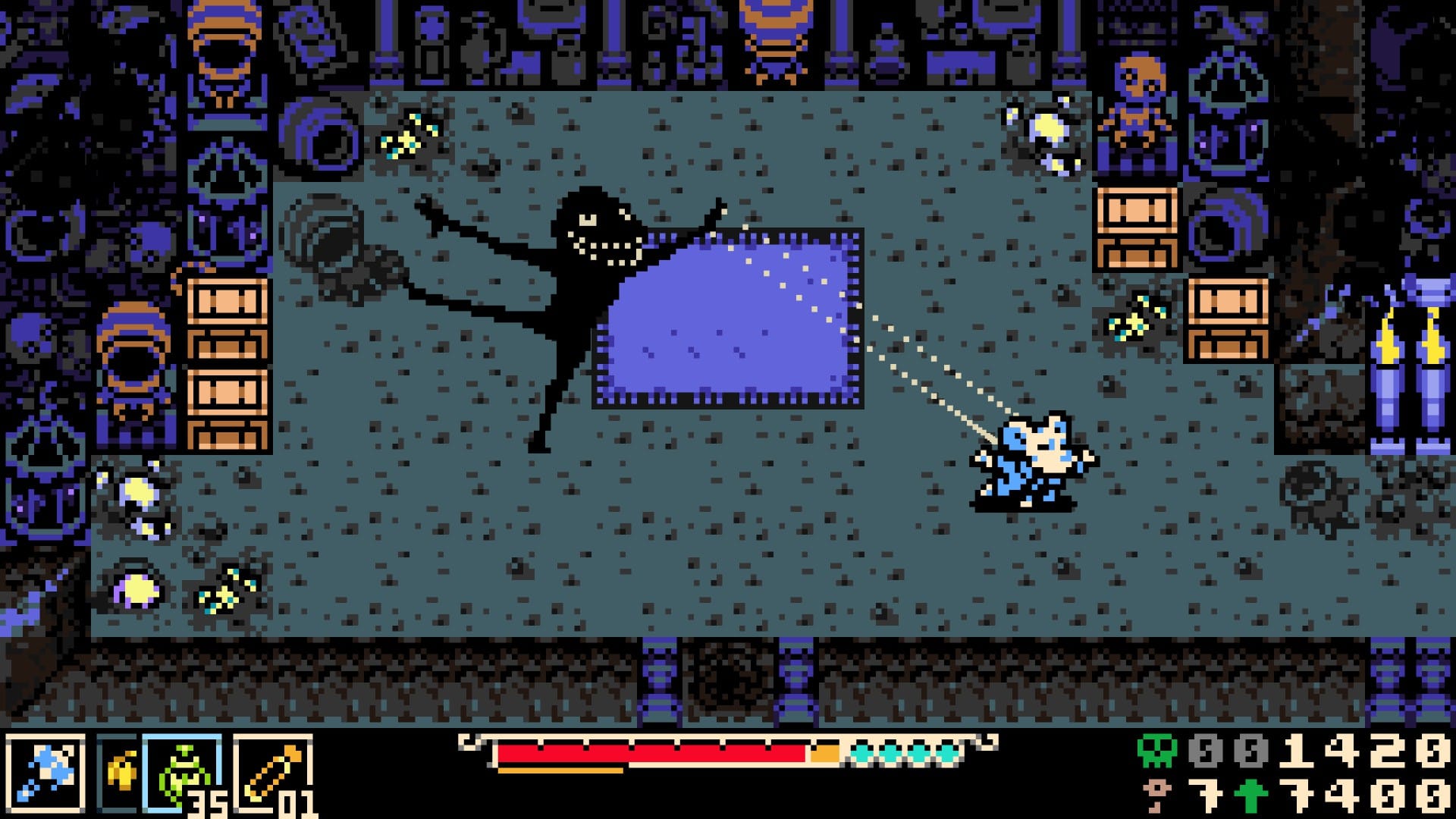
Or, you know, in this case, combat: the real-time challenges of Mina are split fairly evenly between fighting and platforming. While we may not be drawing the playing space ourselves, the heart of that surrealist exercise wasn’t the pen and paper—it was the chance relationships. And the macro—the supposing about these intricate sequences of rooms—is what ensures all that micro remains meaningful. Marionetting our little mouse onscreen is at all times an act of playful improvisation, a creative process which is at the behest of the fixed, “external” simulation on one side and a subconscious, internal world on the other—sides which games have a surreal talent for blending together. Uncertain where to go, the player conducts a series of totally arbitrary tests and if-then perhapses through their mind-thumbs which are granted stakes by the arrangement of hazards unique to each room, which they overcome using a string of inputs that are fundamentally their own. While I’ve got a lot of love for the local action happening upon each of those squares, anyone overly focused on the dagger-swinging and dive-jumping is giving away the game here: Mina works because all of that crunchy, illustrative action is contingent upon a clever arrangement of its unfolding quadrants. The gambit is a real one: wonder being contingent upon nothing more than orthogonality also demands that the developers employ a huge variety of complex design tricks, hone a talent for disguising sequences of rectangles.
Yacht Club Games is very, very good at disguising sequences of rectangles. If you’ve DLC’d their breakout Mega Man-Castlevania-like, Shovel Knight, to completion, you’re well aware that the interactive delight most unique to it comes in its careful recontextualization of flat playing space: Plague Knight setting up his apothecary in the town, Specter Knight turning old roads into new surftracks. To the raytracing-sick contemporary player, the pixelated restrictions in which the studio has come to specialize might seem retrograde. Unfortunately for them, the enemy of art is the absence of limitations, and, as Yacht Club Games puts it: “Making a Game Boy game is just making a game that’s full of constraints from beginning to end” (Source). One only need play Nintendo’s own (gorgeous) 2019 remake of 1993’s Link’s Awakening—or else that bizarre 2023 HD hack which allowed players to zoom out past the original screen boundaries—to see how much the gameplay loop crumbles when it is unbound by hardware restrictions of old, by the simplistic squares and rectangles of the Game Boy Color: the world doesn’t actually feel bigger. It feels a lot smaller. These walls are load-bearing.
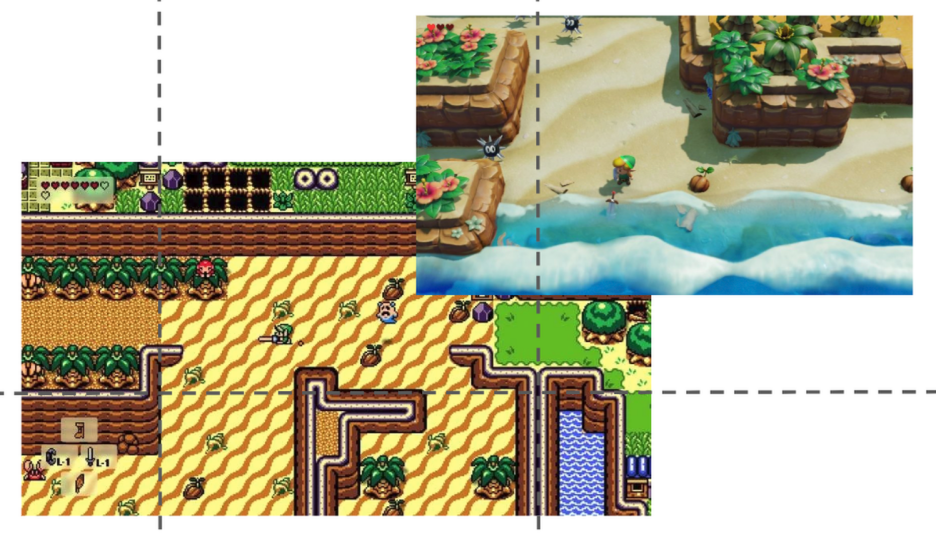
Both Oracle games and Link’s Awakening suffer from another problem, whichever version you alight upon: playing them a second time is somnambulent. The reality of those (pre-2013) 2D Zelda games is that their sequences of events are fixed, their adventures less choose-your-own than the uninitiated might suspect. Outside of masochistic speedrunning and unlicensed randomizers, the joy of replayability is commensurate with your own amnesia.
Mina works as well as it does because it does away with such linearity. Recall Flagship’s hardware issue with the six potential permutations of the original Oracle trilogy and notice that Mina’s six Macguffins might be reached in 720 different permutations. All that before you take into account the glut of optional modifiers, new game plus variants, challenges, and tremendous number of savory optionalities between those main objectives, hidden, like bits of lab cheese. If its first gambit is to follow the worship of adventurous thresholds to its natural conclusion by ditching the graph paper mapscreen entirely—nobly resisting our rat-like, checkmark-erly impulses to treat squares as destinations rather than as pieces of journeys—then its second is to render any one of each player’s multiple journeys across the board as virtually unique.
Would that the rest of the gaming industry begin to understand half as well as the surrealists that divinity comes to us most often in the form of surprise. Here, thankfully, finally, is another game as wise to reward attentiveness with nooks leading to interesting diversions as it is wise to populate every cranny with a menagerie of Weird Little Guys. There are no de mode invisible walls here—thank god—but there are manifold slightly-cracked walls which might allow a particularly circuitous route to be cut into a shorter loop, or which might lead to characters like Cliff, a frog composer, separated from his bandmates, who says things like:
“Lady, I’m plum waist-deep in a bucket o’ bayou brew. Never been better, bebe!”
Or Furl, a long-nosed loner,
“My nose betrays me, and so does my courage. How can I ever hope to woo her?”
Or Gourdan the pumpkin, who moves upon the farmland by suspending himself upon his own tongue,
“It tastes like normal ol’ ground under me. Wish it had somethin’ spice like bile… or acid!”
Each of whom Mina might assist—with love, or with getting the band back together, or with bile—if she feels like it, or not, or for the joy of doing so, or else just for unique rewards which might even come to serve as little memories of the interaction well after you’ve sauntered off to other paths. What's compelling about all this stuff is that it's never once mandated. There are optional minibosses which might be reached through optional exploration sequences, and there are optional stories which I hesitate to call side quests because they're allergic to meaningless busywork. (Sorting out Furl’s nose woes, which might take less than five minutes, is my new gold standard). That I was not railroaded towards these WLGs arbitrarily but was instead only granted their company by way of curiosity, by my taking an interest in an environment which I specifically chose to wander within, is the ticket: adventures don't happen on narrative conveyor belts. People talk a lot about “good” or “bad” writing in games, as if the prose is not entirely beholden to a context of agency, or lack thereof. Some free advice to artists: lowering the barriers of entry can become an act of erasure. Curiosity comes after independence, every time. Any desire a player has to learn about a little world embedded within a few hundred megabytes is downstream from surprise.
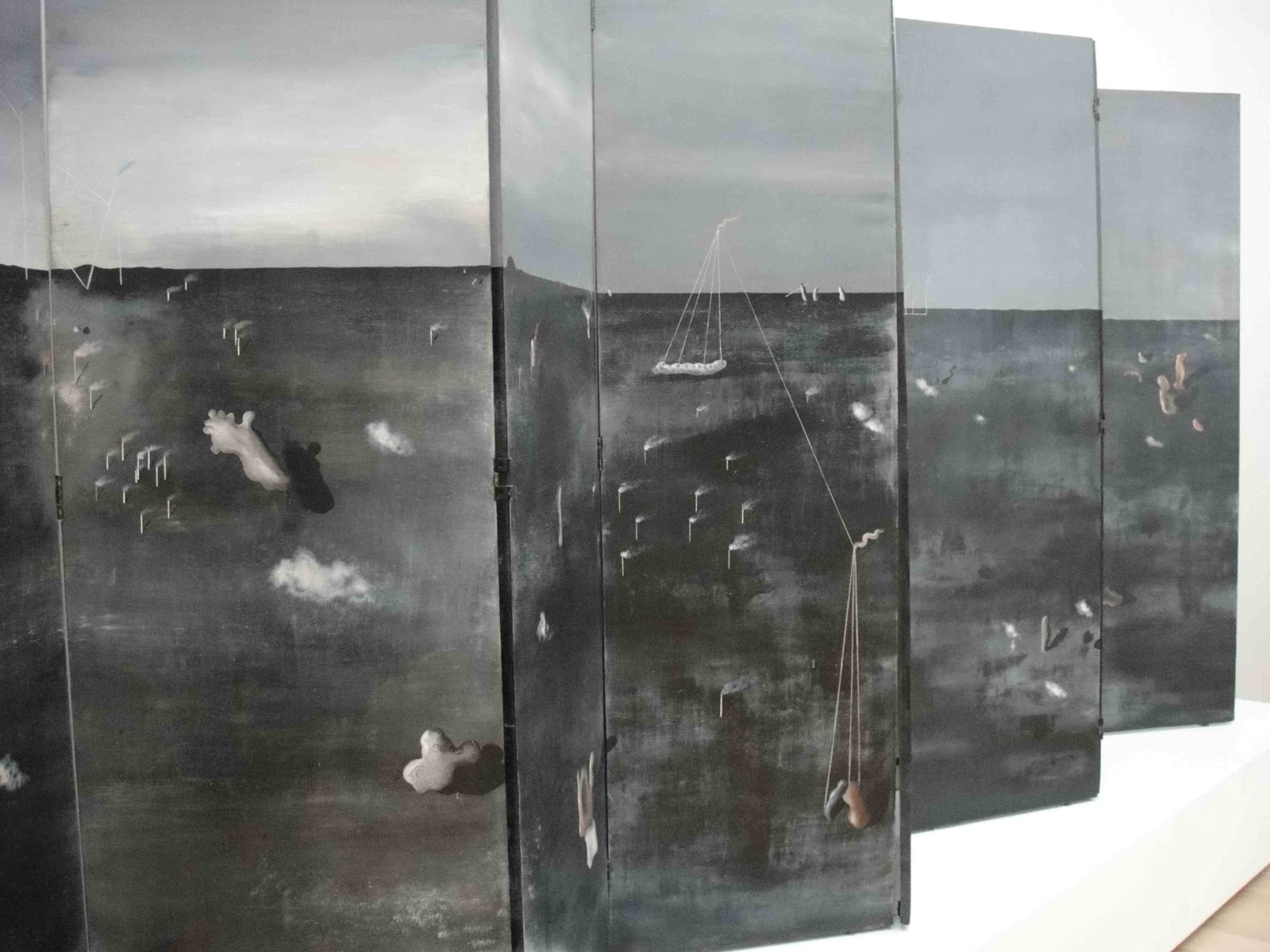
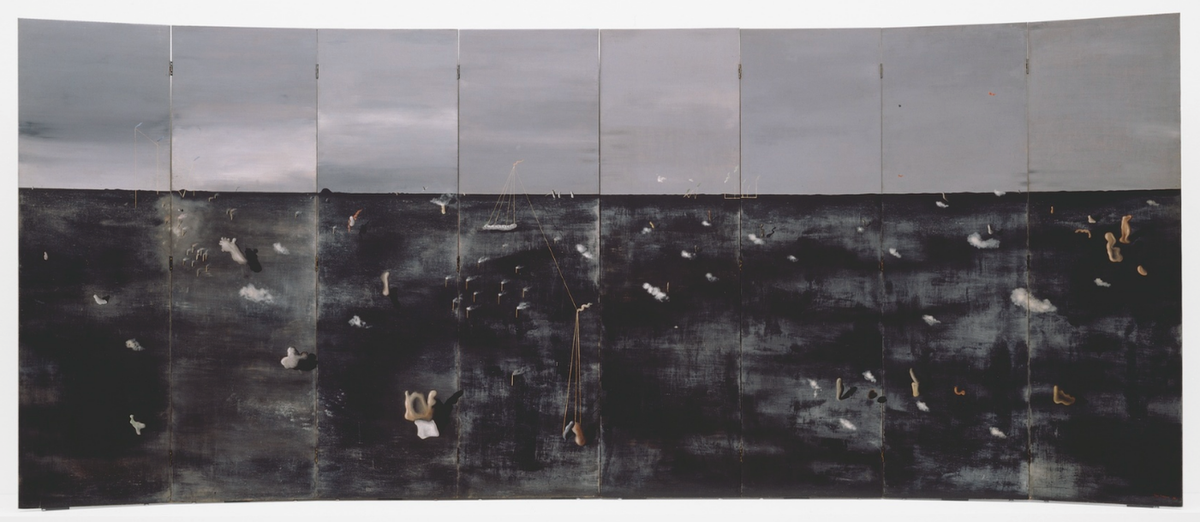
Etymologically, mice are from the earth: the Latin humus, for “soil”, gives way to the Old English mus, for “mouse”; Greek finds “muscle” from the burrowed appearance of a flexed arm while Sanskrit grabs the same root for “thief” somewhere along the way. The primary gimmick of this particular top-down action-adventure is its robust Z-axis: Mina can jump above obstacles but also dig below them. That exploration (& thievery) mandate the latter is the game’s most interesting gimmick, but it is also a thematic wedding of gameplay verbs just as sensible as our overall’d Italian’s descents into green plumberly pipes, a decision likewise beholden to creative constraints, to games of chance. Interactively, mice are adept at finding their own way across thresholds. Folds of space. While Surrealist Andre Breton was joined in the earliest games by the likes of Marcel Duhamel, Jacques Prévert, and Benjamin Péret, it was the painter Yves Tanguy who would go on to most interrogate the hinge which makes up the horizon; Breton commented that “almost all of his canvases” accused the horizon “with a rigorous line.” (Breton 179). Concurrently with the group’s experiments and just before his (permanent) emigration, Tanguy finished an unusually hinged work about which very little compositional context exists. It’s the kind of abstract, barren landscape with which he would come to be associated, but it’s been painted upon a fifteen-foot stretch of wooden folding screen which might have delineated the domestic space of a patron, whose increments can be stretched like an accordion.
The untitled 1928 piece is currently off-view in the permanent collection of the Art Institute in Chicago; I’d written rather unconvincingly to their general inquiries email there to try and get a look at on my lunchbreak. Its panels are a striking contrast to Tanguy’s canvases, likewise populated by scattered surprises of amoeba-like coral, fog trinkets and dream tinsel, but jagged and interrupted, its singular horizon at the behest of arbitrary human compression. Mice are suited to mediation. Relegated to my computer screen, I instead drag a cursor across a photograph of Tanguy's panels with a sophisticated instrument which at one point was a tremendous novelty—given screens were then controlled with command-line interfaces and had no focal point of navigation at all—which at one point was made out of wood, and named, by Douglas Engelbart, for its tail-like wire. There’s some confusion to that anecdote, though, and it doesn’t reconcile the fact that cursors themselves also ended up with a rather mouse-like shape, a miniature which burrows through two-dimensional rectangles while being at all times confined to them. Rodents have been placed in actual conditioning chambers for much longer than computers have borrowed the metaphor—ol’ B.F. Skinner’s box for behavioral psych eventually came to be known by his name—and they were placed in mazes well before that, and they were controlled with intricate traps before that.
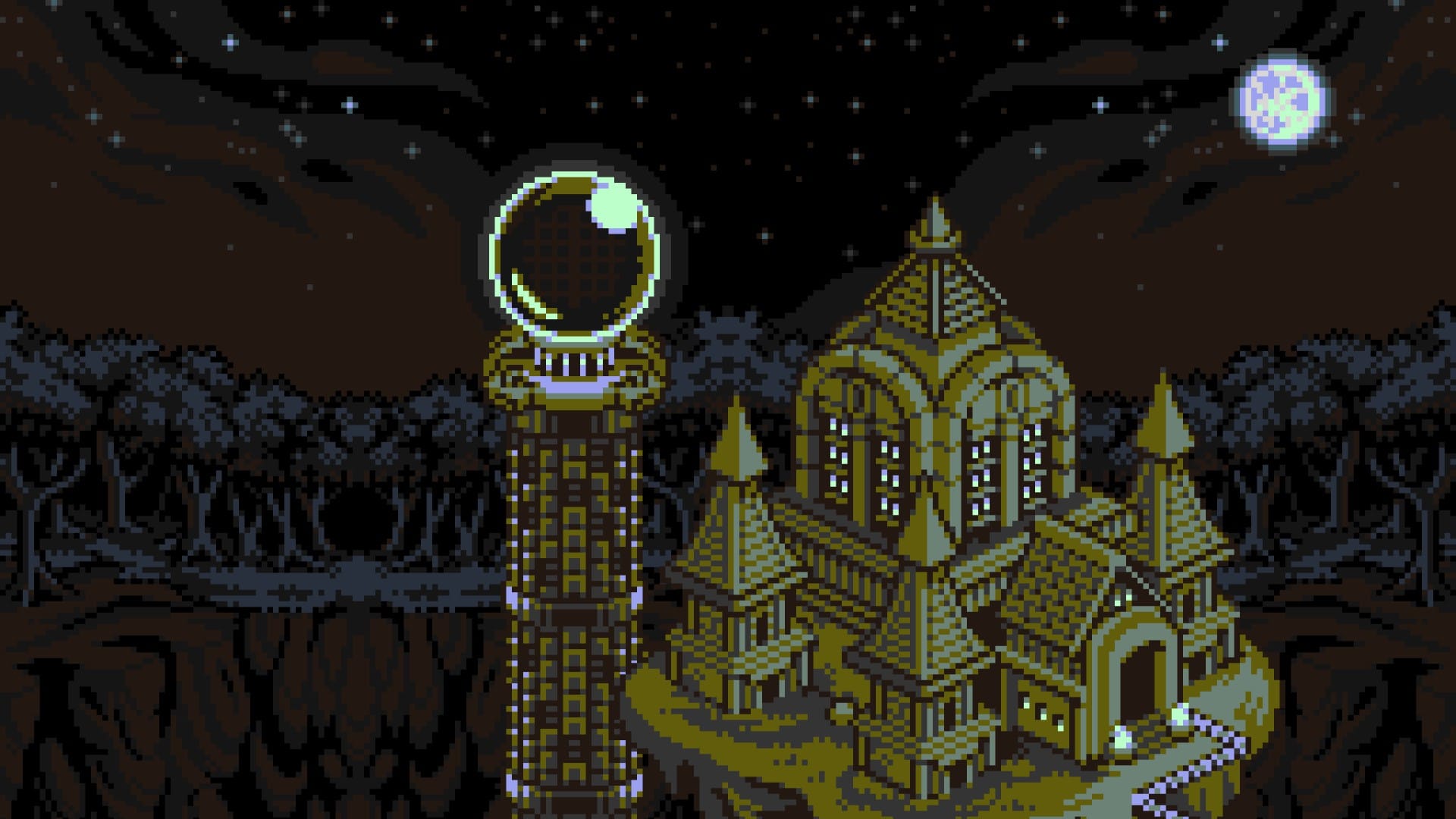
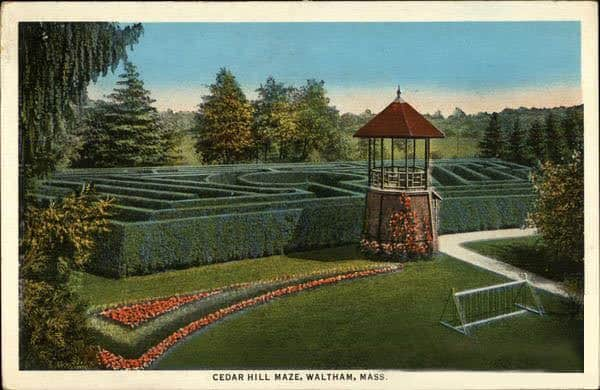
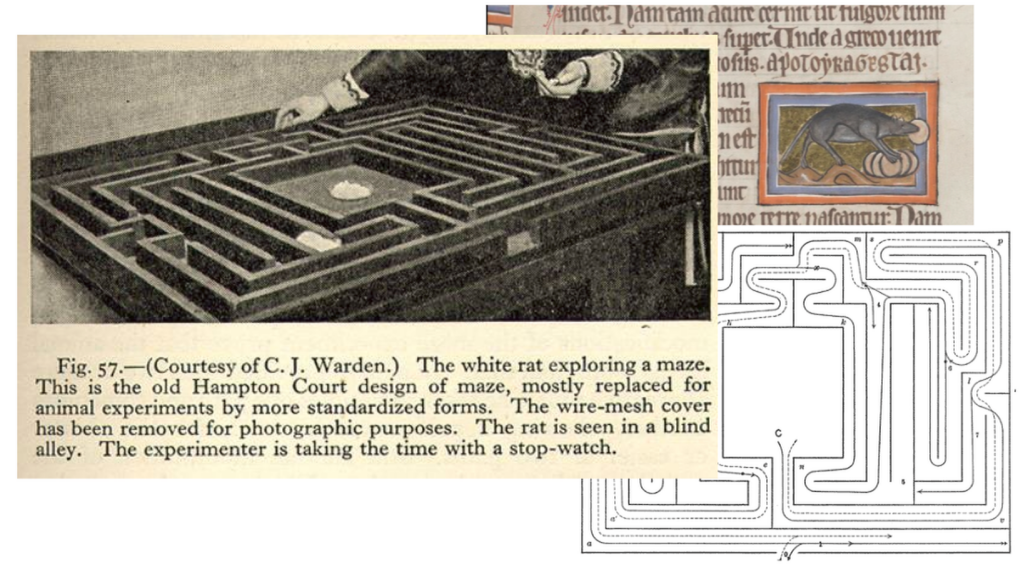
A graduate student named Willard Small was the first to use labyrinths. At the turn of the twentieth century, he took a diagram of a hedge maze at Hampton Court in Worcester, Mass, already a replica of a larger maze in London, and built a smaller replica out of wood (Source). The original hedge was demolished in the ‘60s due to the upkeep; it shares with its laboratory version an open courtyard at the center much like Mina’s hub city of Ossex, and six “cul-de-sacs” not unlike the six dungeons she might visit in any order. Per Dr. Small:
“The aim in these experiments…was to make observations upon the free expression of the animal’s mental processes.”